
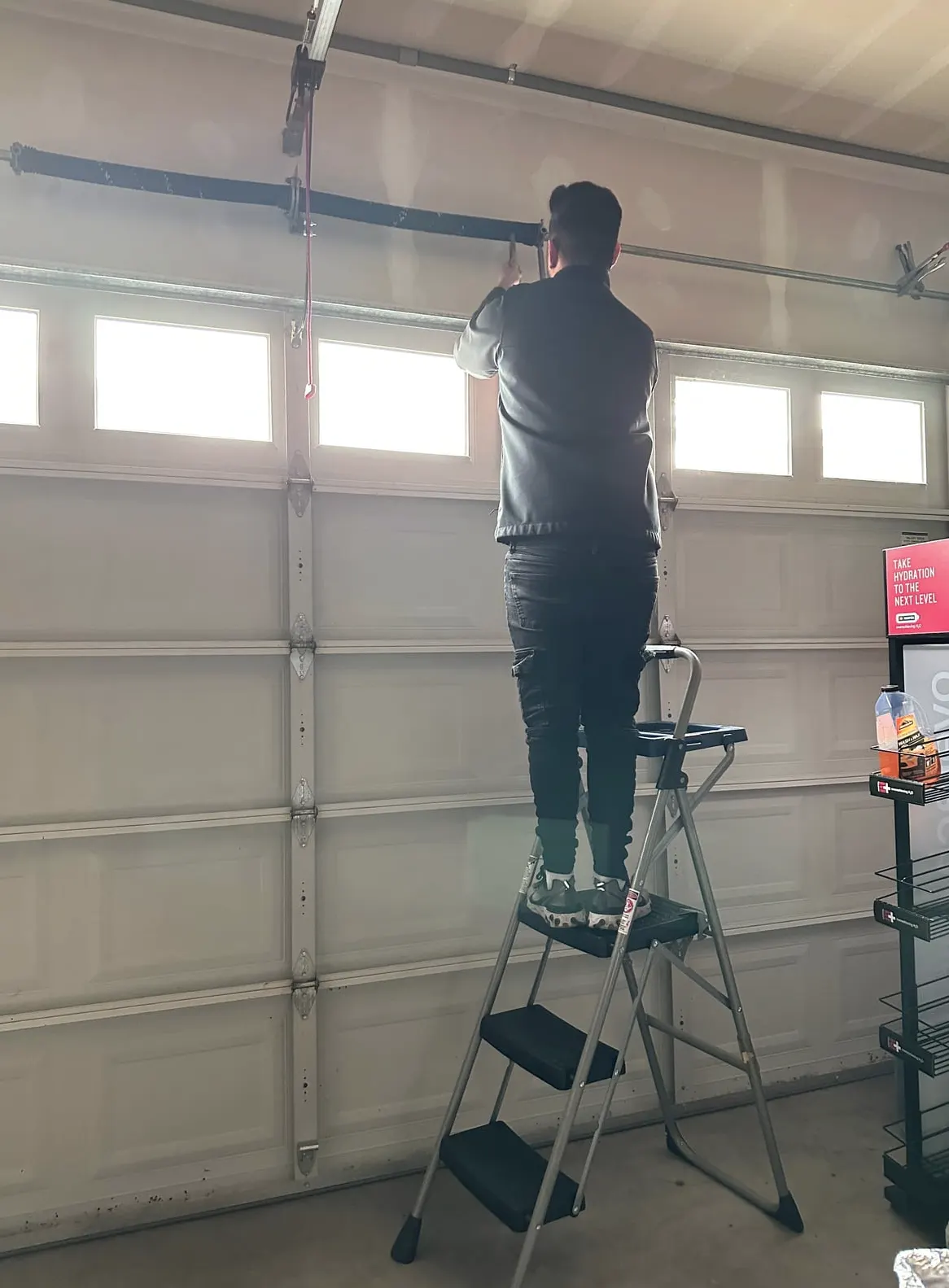
What a Technician Sees on a Typical Call
A homeowner calls because the opener is "straining" — grinding on the way up, reversing halfway closed, or the remote works some days and not others. Nine times out of ten, the opener itself is fine. The real problem is a door that's out of balance, forcing the motor to do work the springs should be handling. Around Melrose, this shows up a lot after a stretch of heavy humidity or a hard summer storm season: wood panels swell and add weight, hardware rusts and adds friction, and springs that were already aging lose tension faster than they would in a drier climate. The opener just keeps compensating until it can't anymore.
Why This Matters More Here
Garage doors in this area deal with constant humidity swings, salt-tinged air if you're anywhere near the coast, and wind-load-rated doors that are already heavier and more sensitive to spring tension than a standard residential door. A door that's even slightly unbalanced puts extra strain on an opener that's also fighting rust and moisture-swollen panels. That combination shortens the life of gears, belts, and motors faster than in drier parts of the country.
Tools You'll Need
- A stepladder
- Work gloves
- A flashlight
- A pencil or piece of tape (to mark door position)
- Someone nearby in case the door moves unexpectedly
Step-by-Step: Testing Your Door's Balance
- Close the door fully. Start from a known position.
- Disconnect the opener. Pull the red manual release cord so the door is running on springs alone, not motor power.
- Lift the door about halfway by hand, slowly and with both hands if it's a double door.
- Let go and watch. A balanced door should stay roughly in place, maybe drifting a few inches.
- Mark that spot with your pencil or tape, then repeat the test at the fully open and one-quarter positions.
- Listen while you lift. Grinding, popping, or a door that feels unexpectedly heavy on one side are signs of a bigger issue than tension alone.
What the Results Mean
- Door stays put: Balance is good. The opener should be doing minimal work.
- Door falls or drops quickly: Springs have lost tension — common after years of humidity exposure.
- Door shoots upward: Springs are over-tensioned, which is just as hard on the opener and dangerous to adjust yourself.
- One side lifts easier than the other: Likely a track alignment or roller problem, not just spring tension.
What an Unbalanced Door Does to Your Opener
An opener is designed to lift a door that's already doing most of the work through properly tensioned springs. When springs weaken, the opener's motor and gears take on weight they weren't built to carry long-term. Over weeks and months, this leads to stripped gears, overheated motors, worn drive belts or chains, and a safety system that trips constantly because the opener reads the extra resistance as an obstruction. Homeowners often replace the opener thinking it's failed, when the actual fix was the springs.
What Homeowners Can Safely Do vs. What Needs a Technician
Safe for homeowners: running the balance test above, visually checking for rust or swelling on panels, lubricating hinges and rollers, tightening loose bolts on tracks and brackets, and clearing debris from tracks after storms.
Leave to a technician: any adjustment to the springs themselves, cable work, or replacing a bent track. Garage door springs are under heavy tension and are one of the few components in a house genuinely dangerous to DIY. If your test shows an imbalance, that's the line where a homeowner's job ends and a professional's begins.
When to Call Precision Garage Door of Melrose
If your door fails the balance test, or your opener has been straining, reversing, or making new noises, it's time for a proper diagnosis. Our technicians handle Garage Door Spring Repair to restore correct tension safely, and we offer Garage Door Maintenance & Tune-Up service to catch rust, swelling, and wear before they turn into an opener replacement. We work throughout Melrose, Keystone Heights, Interlachen, Hawthorne, Palatka, Gainesville, Starke, and Florahome.
If your garage door feels heavy or your opener sounds like it's working too hard, call Precision Garage Door of Melrose today and let us take the guesswork out of it.