
What Skipping This Costs You
A garage door that limps through hurricane season without a proper check-up usually doesn't fail in October. It fails in January, on a cold morning, when a weakened spring finally snaps or a swollen panel jams in the track right as you're trying to leave for work. Ignore the small stuff now and you're looking at an emergency spring replacement instead of a routine tune-up, a stuck door instead of a five-minute lubrication job, or a full panel swap instead of a quick repair. The door doesn't care that it's "only" winter here — months of summer humidity, salt air, and storm stress have already done the damage. The only question is whether it shows up as a minor fix now or a breakdown later.
What Florida's Mild Winter Actually Does to a Garage Door
Winter in this part of Florida isn't brutal, but it's not nothing either. The real issue isn't snow or ice — it's the whiplash. Warm, humid afternoons followed by cold nights cause metal hardware to expand and contract, which loosens bolts, stiffens lubricant, and puts uneven stress on springs that were already working overtime all summer. Add in whatever wind, rain, and debris your door absorbed during hurricane season, and you've got a system that's due for attention before the temperature swings get worse.
Wood and composite panels that soaked up moisture during the humid months can also start to dry and contract once the air finally cools and dries out a bit, which is when hairline cracks and warping become visible. None of this is dramatic on its own, but it compounds if nobody looks at it.
The Pre-Winter Checklist
Springs and Hardware
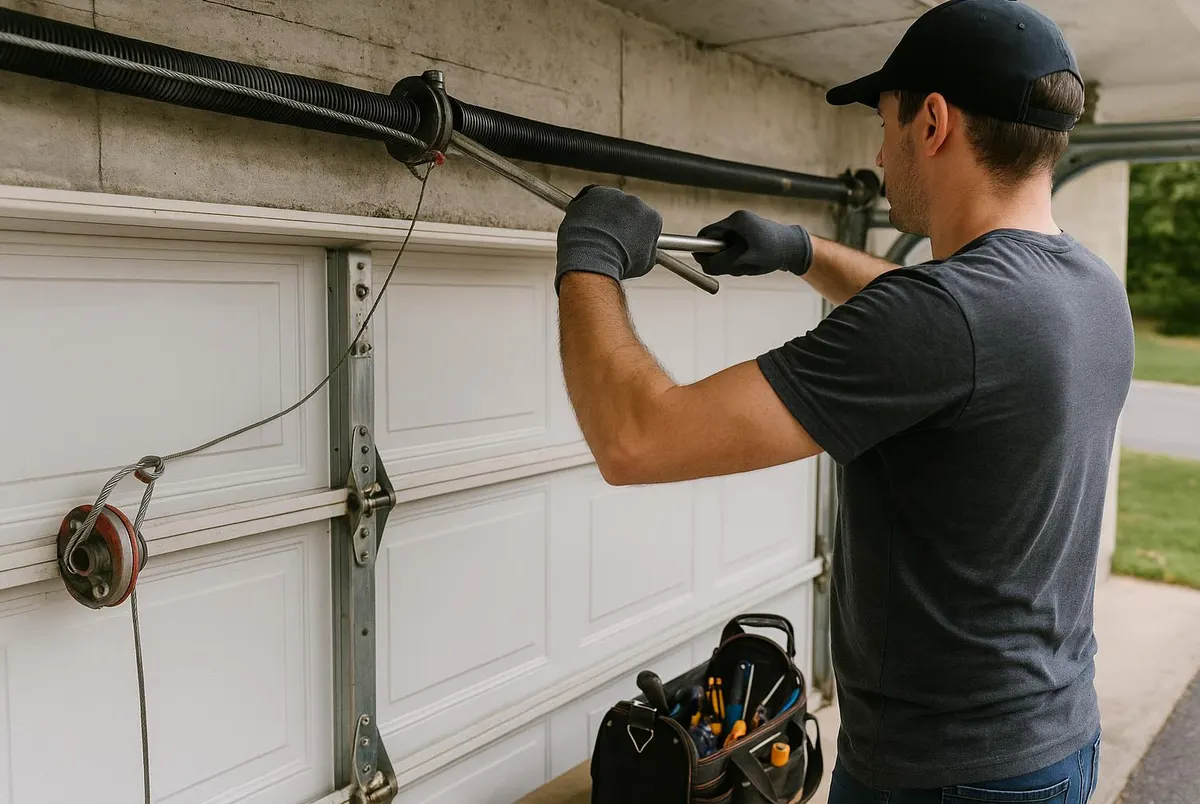
- Look at the springs above the door for visible gaps, rust, or stretching. A spring that's been under tension all through a hot, humid summer is more likely to fail when cold mornings add extra strain to the metal.
- Check that all mounting bolts and brackets are still tight. Thermal expansion and contraction loosens hardware gradually, and a loose bracket under a loaded spring is a real safety issue.
- Never attempt to adjust or replace torsion springs yourself — they're under extreme tension and this is one job worth leaving to a technician every time.
Weatherstripping, Seals, and Panels
- Inspect the rubber seal along the bottom of the door. Florida humidity and sun exposure break these down faster than drier climates, and a cracked seal lets in cold air, moisture, and pests.
- Run a hand along the weatherstripping on the sides and top of the frame. If it's brittle or pulling away, replace it now rather than waiting for a cold draft to remind you.
- Check panels for rust spots (especially near the bottom, where splash-back and standing water are most common) and for any swelling or soft spots that suggest moisture got into the material over the summer.
Tracks, Rollers, and Lubrication
- Clear out any debris, leaves, or grit that built up in the tracks during storm season. Afternoon downpours wash a surprising amount of material into the track channels.
- Lubricate rollers, hinges, and the track itself with a silicone-based lubricant rated for garage doors. Avoid heavy grease, which attracts dust and grit and gums up in cooler temperatures.
- Open and close the door manually (with the opener disconnected) to feel for grinding, sticking, or uneven movement along the track.
Opener and Safety Features
- Test the auto-reverse safety sensors by placing an object in the door's path. If it doesn't reverse immediately, that's a safety issue, not a convenience one.
- If your opener has a battery backup, check it now. After a season of storms and possible power blips, a backup battery that's been drained repeatedly may not hold a charge when you need it.
- Listen for new grinding or straining sounds from the opener motor during operation — a sign it's compensating for something mechanical that needs attention.
Balance Test
Disconnect the opener, lift the door halfway by hand, and let go. It should stay in place. If it drifts up or crashes down, the spring tension is off, and the opener is working harder than it should — a problem that tends to get worse, not better, as temperatures keep shifting.
When to Call Precision Garage Door of Melrose
If your balance test fails, if you spot rust or stretching on the springs, or if the door is sticking, grinding, or reversing on its own, it's time to call in a technician rather than troubleshoot further. Our Garage Door Maintenance & Tune-Up service covers the full inspection — springs, hardware, tracks, rollers, and opener safety features — so small issues get caught before they turn into cold-morning emergencies. If a spring has already failed or stretched beyond safe use, our Garage Door Spring Repair team can replace it with the correct tension for your door's size and weight, done safely and correctly the first time.
Don't wait for a January morning to find out your door wasn't ready for it. Call Precision Garage Door of Melrose today to schedule a pre-winter tune-up for your home in Melrose, FL or the surrounding area.